
Medical Review: This content is supervised and verified by
Dr. Güncel Öztürk.
When undergoing a Follicular Unit Extraction (FUE) or Direct Hair Implantation (DHI) procedure, patience is as critical as surgical precision. While the surgery itself takes only a single day, achieving the final, high-density result is a 12-month biological journey.
Understanding the hair growth cycles, scalp recovery phases, and graft maturation steps helps manage expectations and eliminates post-operative anxiety. In this comprehensive guide, we break down the 12-month post-hair transplant timeline month by month so you know exactly what to expect at every stage of your recovery in Turkey.
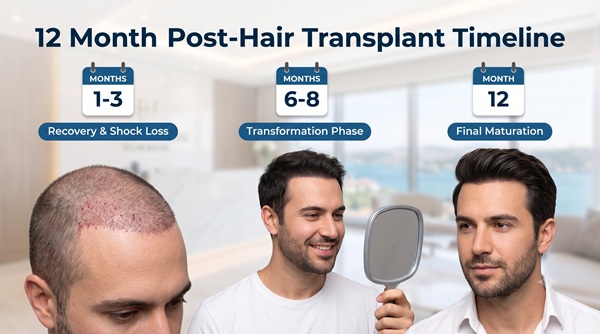
12-Month Recovery Highlights:
- Days 1–10: Critical healing window, scab formation, and gentle washing phase.
- Weeks 2–8: “Shock Loss” phase (temporary shedding of transplanted hair shafts).
- Months 3–4: Early activation (thin, fine micro-hairs start sprouting).
- Months 6–9: Significant cosmetic improvement and visible hair thickening.
- Months 12–18: Complete density maturation and final natural results.
Month 1: The Critical Healing & Shock Loss Phase
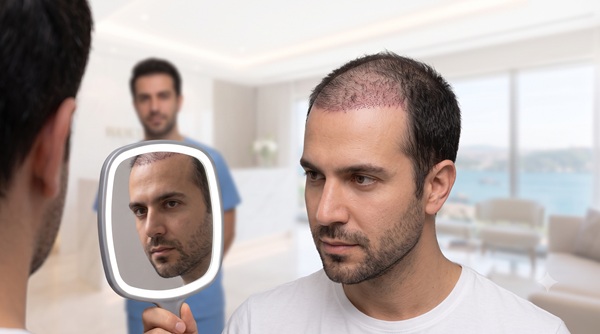
The first 30 days post-surgery are the most delicate. During this period, newly implanted follicles establish their permanent blood supply (neovascularization) while the scalp heals from micro-incisions.
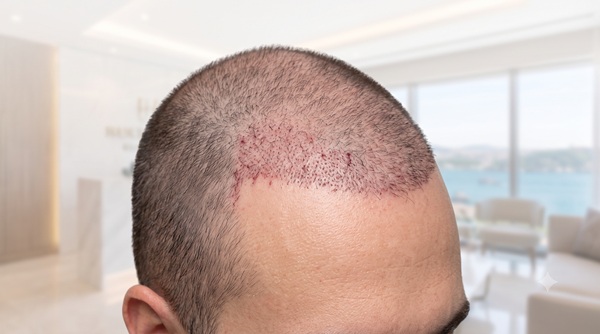
Days 1 to 10: Scab Formation & Removal
- Swelling & Redness: Mild forehead swelling (edema) and redness in the recipient zone are completely normal reactions to local anesthesia and saline fluid.
- Scab Removal (Day 10): Around days 8 to 10, specialized gentle washing protocols dissolve all scabs, leaving a clean, healed scalp.
Weeks 2 to 4: The Dreaded “Shock Loss”
Between weeks 2 and 4, most patients experience shock loss (telogen effluvium). The newly transplanted hair shafts fall out.
> Key Fact: Do not panic—this is a normal physiological response. The hair shaft falls out, but the root (follicle bulb) remains safely anchored beneath the skin, entering a temporary resting phase (telogen phase).
Months 2 to 3: The Dormant Phase (“The Ugly Duckling Stage”)
Often referred to by hair restoration surgeons as the “ugly duckling stage,” months 2 and 3 require mental resilience.
- Visual Appearance: The recipient zone may look much like it did before surgery, or even slightly sparser due to temporary shock loss in adjacent native hair.
- Scalp Sensation: It is common to experience mild numbness, tightness, or slight itching in both the donor and recipient areas as peripheral nerves regenerate.
- Folliculitis: Occasional small red pimples may appear as new hair shafts prepare to break through the skin surface.
Months 4 to 5: Early Growth & Sprouting
By month 4, the dormant hair follicles wake up and re-enter the active growth phase (*anagen phase*).
- Initial Texture: The first emerging hairs are typically thin, fine, and soft (similar to baby hair).
- Uneven Growth: Hair follicles do not grow at the exact same speed. It is completely normal for one side of the hairline or crown to look slightly denser than the other at this stage.
- Cosmetic Yield: By the end of month 5, you can expect roughly 30% to 40% of the total final graft output to be visible.
Months 6 to 8: The Major Transformation Phase
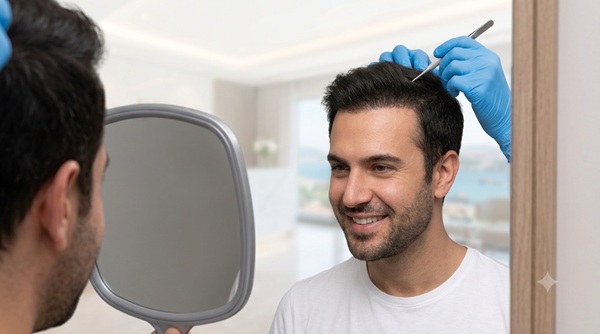
Months 6 through 8 mark the most exciting turning point in the post-operative journey. The transformation becomes undeniably visible to friends, family, and yourself.
| Timeframe | Expected Growth Yield | Hair Characteristics |
|---|---|---|
| Month 6 | 50% – 60% Visible Growth | Noticeable coverage; hair shafts begin to thicken. |
| Month 7 | 60% – 70% Visible Growth | Improved hair texture, dark color, and natural direction. |
| Month 8 | 70% – 80% Visible Growth | Sufficient density to style and cut with scissors. |
Months 9 to 11: Maturation & Thickening
During these months, nearly all transplanted grafts have emerged. The focus shifts from *new hair emergence* to *shaft diameter thickening* and texture maturation.
- Shaft Diameter: The individual hair strands thicken significantly, providing far greater visual volume and scalp coverage.
- Natural Integration: The texture of the transplanted hair softens and blends seamlessly with your original, surrounding hair.
- Crown Dynamics: If you had grafts placed in the crown (vertex) area, keep in mind that the crown has slower blood circulation and typically trails behind the hairline by 2 to 3 months.
Month 12 and Beyond: The Final Result

At the 12-month mark, the journey is officially complete for the majority of patients ( hairline and mid-scalp regions achieve 90% to 100% maturity).
- Final Styling: You can now wash, cut, dye, or style your hair in any way you wish.
- Donor Area Recovery: The donor area in the back and sides of the head is completely healed and regenerated without visible signs of extraction when performed by top-tier Turkish specialists.
- Crown Area Note: For full crown restorations, final maturity and maximum density may continue to develop up to 15 to 18 months post-op.
Frequently Asked Questions About Hair Transplant Timelines
When can I wash my hair normally after a hair transplant in Turkey?
Why does the crown (vertex) take longer to grow than the hairline?
Can I accelerate my hair growth during the 12-month timeline?
Medical fact-checked and reviewed by TurkHairIndex Editorial Board
Leave a Reply