
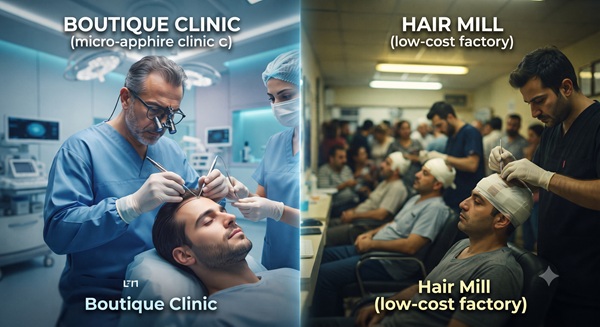
The medical tourism industry in Istanbul is booming. As the global epicenter for hair restoration, Turkey attracts thousands of patients annually. However, this growth has birthed a predatory business model known as the “Hair Mill.” These clinics prioritize mass-production efficiency over patient safety, often leaving clients with depleted donor areas, unnatural hairlines, and serious health risks.
At Turkhairindex, our mission is to provide independent, data-driven transparency. If you are planning your surgery for 2026, you must understand the difference between a surgical clinic and a hair factory. This guide is your ultimate survival checklist to navigate the noise and protect your most valuable asset: your donor hair.
The “Hair Mill” vs. The “Boutique Clinic”
Understanding the business model is your first line of defense. A “Hair Mill” operates on high volume and low costs, whereas a Boutique Clinic operates on high-precision surgical standards. Use this comparison table to evaluate the clinics on your shortlist:
| Feature | The “Hair Mill” | The Boutique Clinic |
|---|---|---|
| Daily Capacity | 10-20+ patients | 1-2 patients max |
| Surgeon Involvement | Supervisory/None | Full surgical control |
| Graft Planning | Mass-market aggression | Conservative, customized |
| Follow-up | Zero/Automated | 12-month medical oversight |
The 7 Red Flags of a Hair Mill
1. The “Too Good to Be True” Price Tag
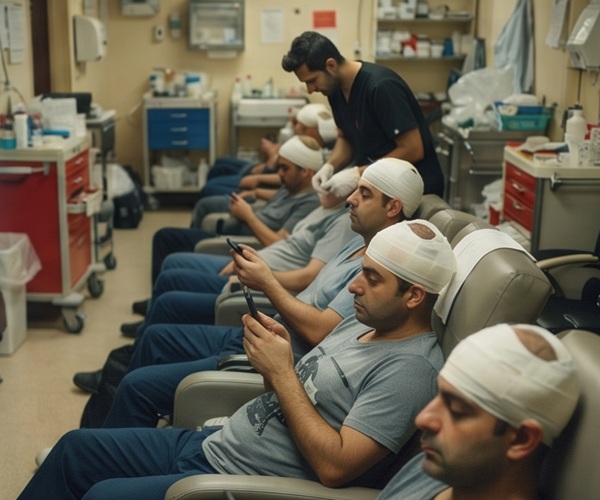
If an “all-inclusive” package is under €1,500, you are not paying for medical excellence—you are paying for a production line. Quality hair restoration requires sterile equipment, premium anesthesia, and a team of qualified professionals. When prices are this low, costs are cut by reusing surgical blades (an infection risk), using inexperienced “trainees,” or operating in non-accredited, non-sterile environments.
2. The “Ghost Surgeon” Syndrome
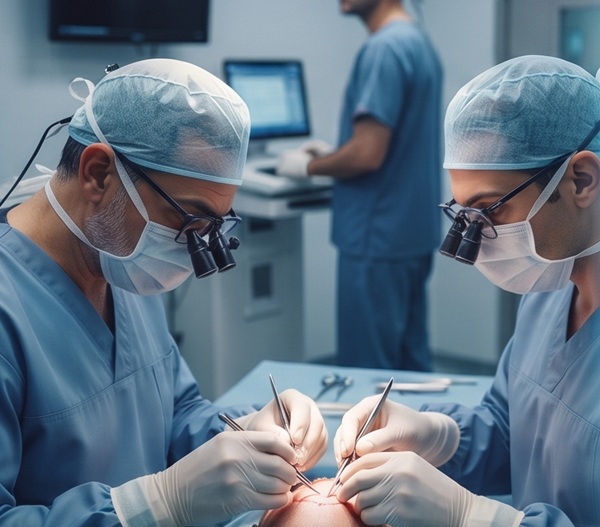
In many mills, the surgeon is just a face on the website. The entire extraction and implantation process is often performed by technicians with no medical license. The Acid Test: Ask directly, “Will the surgeon perform the incisions?” If the answer is vague, walk away. Incision-making determines the angle, depth, and direction of your hair growth; this is a non-delegable surgical act.
3. The Myth of the “Mega-Session” (6,000 Grafts)
Promises of 6,000+ grafts in one day are dangerous. Your donor area is finite. Over-harvesting the “safe zone” at the back of the head leads to permanent thinning, a “moth-eaten” appearance, and irreversible donor site scarring. A reputable surgeon focuses on graft survival rates and density optimization, not just high numbers. If they promise a record-breaking count, they are ignoring your long-term donor sustainability.
4. Lack of Personalized Medical Assessment
A legitimate clinic requires a deep analysis of your hair loss progression, scalp elasticity, and donor density. If they provide a quote within 10 minutes of receiving a blurry photo, they are not evaluating your candidacy; they are just confirming a sale. A professional consultation should cover your medical history, current medications, and any potential autoimmune or circulatory conditions that affect graft healing.
5. “Instagram Perfection” vs. Reality
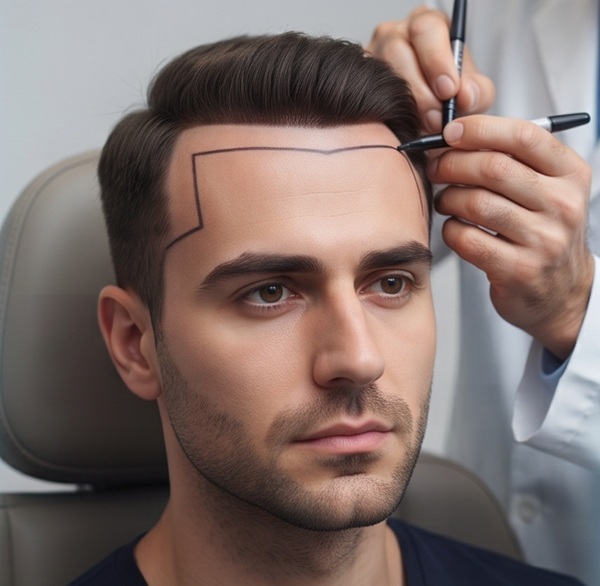
Social media is a curated highlight reel. Don’t be fooled by immediate post-op photos where the redness is hidden by heavy lighting or filters. Demand to see 12-month post-op results in natural light. Look for the “hairline design”—is it natural for your facial structure, or is it a perfectly straight, robotic line that will look fake as you age?
6. The Absence of Post-Operative Protocols
Surgery is just the beginning. The 12 months following your procedure are critical. “Hair mills” often abandon you the moment you board your flight home. They lack a medical team to handle post-op complications like necrosis, localized infections, or severe shock loss. A world-class clinic should have a clear protocol for you to consult a doctor at months 3, 6, and 9.
7. High-Pressure Sales Tactics
“Book now or lose this price.” “We have one slot left.” These are classic sales techniques used by travel agencies, not medical professionals. If you feel rushed to transfer money before having a face-to-face video consultation, this is a major warning sign.
The Biological Reality of Graft Survival
A key indicator of a premium clinic is their focus on ex-vivo time—the time a graft spends outside the body before being re-implanted. In “hair mills,” grafts are often left sitting in saline solution for hours while technicians move from one patient to the next, causing significant graft death. Boutique clinics use specialized bio-graft storage solutions and work in smaller batches to ensure maximum follicle viability. This technical detail is what separates a 95% success rate from a 60% result.
Anatomy of a Failed Transplant: Case Studies
We frequently analyze patients who suffer from “Donor Depletion.” This occurs when a surgeon harvests too close to the temporal or nape areas where hair is not DHT-resistant. Years later, those transplanted hairs fall out, and the donor area remains scarred and patchy. Conversely, successful cases show a transition zone, where finer hairs are placed at the hairline to create a soft, natural aesthetic, mimicking a real human hairline rather than a “wall” of hair.
The Hidden Cost of Revision Surgeries
Many patients choose a low-cost hair mill thinking, “If it goes wrong, I can just get it fixed later.” This is a massive financial and medical misconception. Repairing a bad hair transplant (a revision surgery) is exponentially more expensive and technically difficult than a primary procedure. It requires extracting poorly placed grafts, treating scalp scar tissue, and carefully utilizing whatever limited donor supply remains. In 2026, a high-quality repair session in a top-tier European or Turkish boutique clinic can easily cost three times the price of an initial surgery. Saving €1,000 today can mean spending €5,000 tomorrow to fix preventable damage.
Understanding the Post-Op Hair Cycle
Patients are often unprepared for the “Ugly Duckling” phase. Between months 2 and 4, the transplanted hairs enter a telogen (resting) phase and shed. This is completely normal and is a sign of vascular integration. However, in low-quality clinics, patients are not warned about this, leading to panic and unnecessary stress. A reputable clinic provides a detailed roadmap of the shedding and regrowth cycle, managing your expectations so you know exactly when to expect the first growth spurs at month 5 and the mature results at month 12.
How to Spot Fake Reviews and “Paid” Reputation
Many clinics pay for “reputation management” services that flood platforms like Trustpilot or Google with fake 5-star reviews. To spot them: Look for reviews with generic feedback like “Great service, very happy.” Instead, look for detailed accounts that mention specific staff members, the consultation process, and, crucially, post-op complications that were successfully handled. If a clinic has 2,000 reviews and 99% are perfect 5-stars, it is statistically impossible and almost certainly manipulated.
Essential FAQ: Before You Book
- What is “Shock Loss“? A temporary shedding of native hair caused by the trauma of the surgery. Normal, but must be monitored by a professional.
- Can I combine dental work? Generally discouraged in the first 48 hours due to potential medication interactions and the need for absolute physical rest.
- How do I verify a doctor? Always cross-reference their name with the official Turkish Medical Association and the International Society of Hair Restoration Surgery (ISHRS).
- Is general anesthesia safe? Most FUE procedures are done with local anesthesia. If a clinic offers general anesthesia for a standard hair transplant, this is an unnecessary health risk.
The Turkhairindex Verdict
Your hair is a finite resource. Once those follicles are harvested, they are gone forever. We have seen too many patients arrive at our desk with “donor depletion” caused by previous sessions in low-cost mills. Our final advice? Be the patient who asks the hard questions. If a clinic grows frustrated by your due diligence, they are the wrong clinic for you. Take your time, verify your surgeon, and prioritize safety above all else. Your goal isn’t just to get a transplant; your goal is to look better for the next 40 years.
Still unsure about your clinic choice?
Contact our independent advisory team today for an honest, unbiased assessment of your chosen clinic’s safety protocols. We don’t book your surgery; we protect your investment.
Leave a Reply