Turkey has undeniably earned its title as the hair transplant capital of the world. Every year, hundreds of thousands of international patients land in Istanbul seeking to restore their hair and their confidence. The combination of highly competitive pricing, luxury tourism packages, and advanced techniques like FUE (Follicular Unit Extraction) and DHI (Direct Hair Implantation) makes it an attractive destination.
However, behind the glossy marketing campaigns and flawless Instagram before-and-after photos lies a critical structural division within the industry that every prospective patient must understand: the reality of “technician-only” clinics versus doctor-led facilities.
If you are researching hair restoration options in Turkey, you have likely come across warnings about clinics where technicians, rather than licensed medical doctors, perform the surgeries. What is the truth behind these warnings? Are technician-only clinics inherently dangerous, or are they a legitimate, cost-effective alternative?
Let’s unpack the reality of the Turkish hair transplant ecosystem to help you make a safe, informed decision.
What Exactly is a “Technician-Only” Clinic?
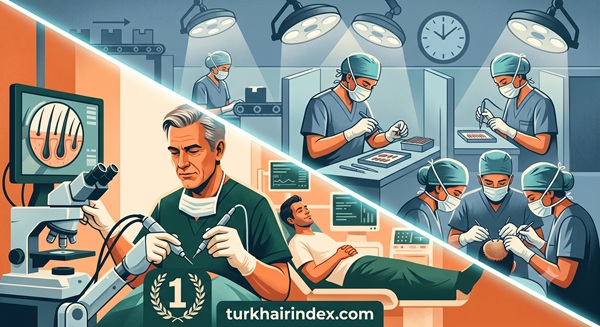
In a standard medical procedure, a surgeon diagnoses the patient and performs the operation. In the high-volume world of hair transplantation, a different operational model has emerged: the assembly-line or technician-driven model.
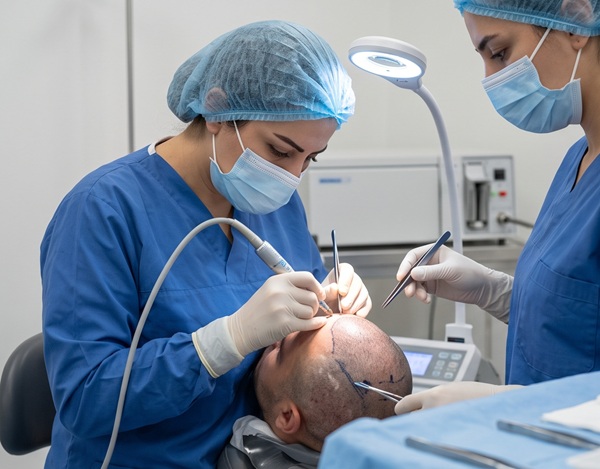
In a technician-only clinic, the medical doctor (if there is one attached to the brand at all) acts primarily as a figurehead, an administrator, or a marketing tool. The actual surgical execution—specifically the extraction of grafts from the donor area, the design of the hairline, and the creation of incisions (channels) in the recipient area—is carried out entirely by surgical technicians.
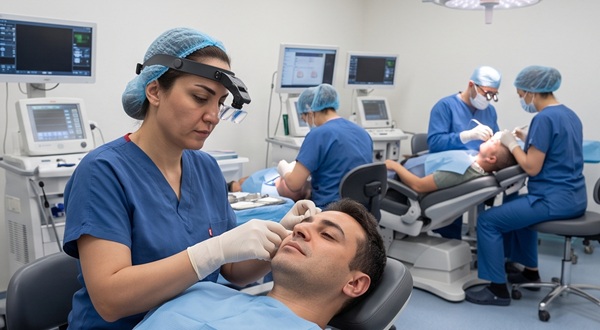
These technicians are often nurses, emergency medical technicians (EMTs), or individuals trained specifically in graft handling. In the most commercialized setups, a single clinic might operate 10 to 20 rooms simultaneously, with teams of technicians moving from patient to patient while the overseeing doctor merely walks through the room for a few minutes to say hello.
Why the Model Exists: The Economics of Scale
To understand the truth about these clinics, we must understand the economics. A world-class hair transplant surgeon can realistically operate on one, perhaps two, patients per day if they are deeply involved in the manual labor of extraction and implantation.
By shifting the physical labor to teams of technicians, a clinic can dramatically scale its operations. This operational efficiency is the precise reason why Turkey can offer packages at $1,800 to $2,500 that include 4-star hotels and private transfers—prices that would be economically impossible in Western Europe or North America, where a single doctor-led surgery can cost upwards of $10,000.
The Legal Landscape in Turkey
From a strictly legal standpoint, the Turkish Ministry of Health has clear regulations: Hair transplantation is a surgical procedure that must be performed by or under the direct, active supervision of a licensed medical doctor (typically a plastic surgeon or a dermatologist), and it must take place in an accredited surgical facility or hospital.
However, enforcement in a massive, fast-moving market can be challenging. Many low-cost clinics operate in a gray area. They register under a doctor’s medical license to pass basic inspections, but the day-to-day operations are fully delegated to the technical staff.
The Pros and Cons: A Balanced View
It is easy to label all technician-run clinics as unsafe “hair mills,” but the reality is more nuanced. Thousands of patients have walked out of technician-only clinics with exceptional, life-changing results. Why? Because experience matters.
The Potential Advantages
- High Repetitive Experience: A technician who extracts 4,000 grafts a day, five days a week, for five years, often develops an extraordinary level of manual dexterity and speed. Their muscle memory in handling fragile follicular units can sometimes surpass that of a general doctor who only performs the procedure occasionally.
- Affordability: This model democratizes hair restoration. It allows individuals who could never afford a $12,000 surgeon in London or New York to access treatment.
The Significant Risks
The critical danger of a technician-only clinic arises when things go wrong, or when long-term planning is ignored for short-term aesthetic results.
- Lack of Diagnostic Medical Expertise: Technicians are trained to extract and implant; they are generally not trained in advanced dermatology. They may fail to diagnose underlying scalp conditions, such as Alopecia Areata or Lichen Planopilaris, where a transplant will inevitably fail or worsen the condition.
- Donor Area Over-Harvesting: This is the most common issue seen in low-cost clinics. In an attempt to promise a high graft count (e.g., “5,000 grafts in one session”), technicians may over-exploit the donor zone, leaving the back of the head looking patchy, scarred, and depleted. If the patient’s hair loss progresses in the future, there will be no donor hair left for a second procedure.
The Donor Danger Zone: Once a hair follicle is extracted from the donor zone, it never grows back in that spot. Managing the donor area requires long-term medical foresight, not just immediate maximization.
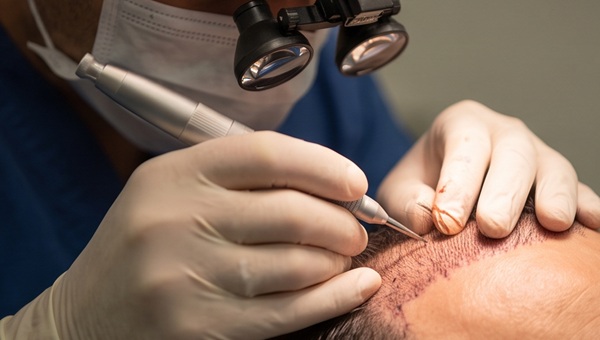
- Unnatural Hairline Design: Designing a hairline is an art form that requires an understanding of facial symmetry, aging patterns, and hair angulation. Technicians without proper aesthetic training often create unnatural, straight, or overly low hairlines that do not age well as the patient matures.
- Emergency Management: While complications during a hair transplant are rare, they do happen. Local anesthetic toxicity, sudden blood pressure drops, or severe allergic reactions require immediate medical intervention by a qualified doctor, not a technician.
The Spectrum of Care: Finding the Middle Ground
When choosing a clinic in Turkey, it is a mistake to think the choices are only “a completely blind black-market clinic” or “a world-famous celebrity surgeon charging $15,000.” The Turkish market actually operates on a spectrum:
[Level 1: Unsupervised Hair Mills] --> [Level 2: Doctor-Supervised/Tech-Executed] --> [Level 3: Doctor-Led / Shared Work] --> [Level 4: Pure Doctor-Only Execution]
- Level 1: The Pure Hair Mill. No doctor present. High volume, minimal accountability. Highest risk.
- Level 2: Doctor-Supervised, Tech-Executed. A medical doctor does the initial consultation, designs the hairline, and steps in to create the channels (the most critical artistic step). The technicians handle the extraction and placement. This is the most common balanced model in Turkey’s top reputable clinics.
- Level 3 & 4: Doctor-Led / Doctor-Only. The surgeon performs the extractions and the incisions themselves, utilizing assistants only for sorting and placing grafts. These clinics typically take only 1–2 patients per day and command higher prices.
How to Protect Yourself: Questions to Ask Before Booking
If you are considering a clinic in Turkey, you must look past the marketing slogans. To determine the true level of doctor involvement, ask the medical consultants these direct questions before paying a deposit:
- Who is the specific doctor responsible for my surgery? (Get a name, medical registration number, and search for their credentials).
- What exact steps of the procedure will the doctor perform? (Will they design the hairline? Will they open the channels? Or will they just view the procedure during a walkthrough?).
- How many patients does the clinic accept per day? (If a clinic takes 15+ patients a day under one doctor’s name, it is a technician-only assembly line).
- Will my procedure take place inside an accredited hospital environment?
The TurkHairIndex Verdict
The truth about technician-only clinics in Turkey is that they are not automatically synonymous with a failed surgery, but they drastically increase your risk profile.
An experienced team of technicians operating under the genuine, active supervision of a qualified plastic surgeon or dermatologist can deliver world-class results safely and affordably. However, choosing a clinic where doctors are entirely absent removes the vital medical safety net that guards your health and your long-term donor hair availability.
At TurkHairIndex.com, our recommendation is clear: Never compromise on the presence of a medical doctor. Look for clinics that offer a transparent, balanced model where the surgeon takes full medical responsibility for your diagnosis, planning, and critical surgical incisions. Your hair is an investment for life—treat it with the medical respect it deserves.
Leave a Reply