
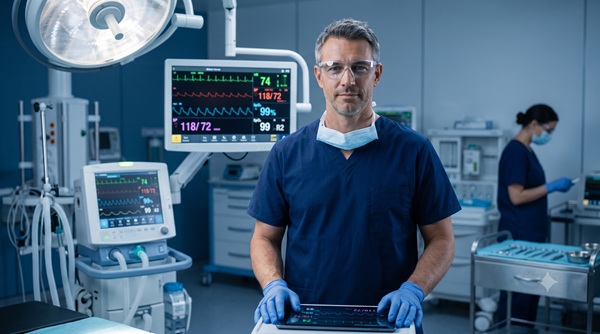
Medical Review: This content is supervised and verified by
Dr. Nesim Tüğen.
When researching a hair transplant, most of the content you find online focuses on the ideal outcomes: natural hairlines, dense coverage, and before-and-after transformations. However, a hair transplant is not just a cosmetic treatment—it is a surgical procedure.
True clinical excellence and safety are not measured when everything goes perfectly; they are defined by how a clinic prepares for, identifies, and manages the unexpected.
Whether you are dealing with a standard procedure or a high-complexity case—such as advanced Norwood 7 alopecia or grafting over extensive scalp scars—understanding a clinic’s emergency infrastructure is a non-negotiable step before making your choice. Here is an objective breakdown of the emergency protocols that separate elite medical institutions from low-cost commercial centers.
1. The Red Line: Clinic vs. Hospital-Grade Infrastructure
Many low-cost commercial centers operate in basic outpatient offices or commercial buildings that lack proper medical backup. If a patient experiences a severe drop in blood pressure, an allergic reaction to local anesthesia, or cardiovascular stress, these offices are fundamentally unequipped to respond.
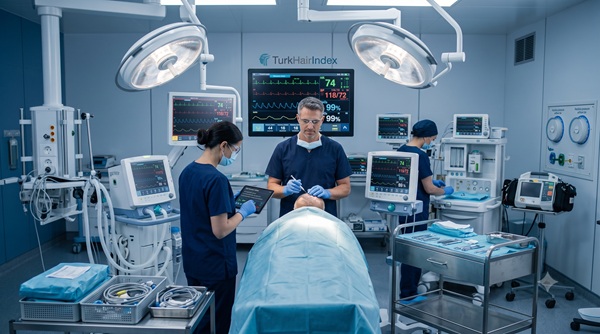
At TurkHairIndex, we emphasize that premium clinics operate exclusively within high-complexity, hospital-grade infrastructures. This ensures immediate access to:
- Advanced Monitoring Systems: Continuous tracking of vital signs, oxygen saturation, and cardiac rhythm throughout surgeries that often exceed 8 hours.
- Intensive Care Units (ICU): Direct, on-site access to an ICU without requiring emergency vehicle transfer to another facility.
- Sterile Cleanroom Environments: Specialized positive-pressure airflow systems to minimize the risk of intraoperative bacterial contamination.
2. Intraoperative Risks and How Elite Teams Manage Them
While hair restoration has a remarkably low rate of severe complications, an elite surgical team treats every procedure with absolute medical rigor.
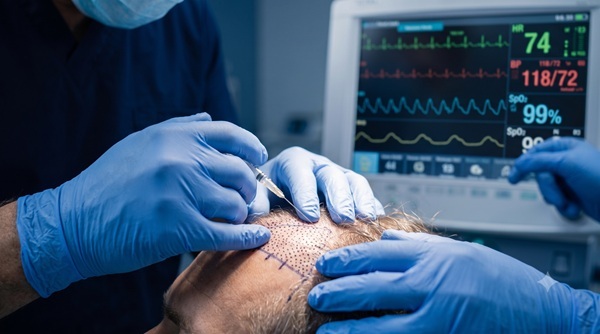
Anesthetic Complications & Lidocaine Toxicity
Local anesthesia is exceptionally safe when administered mathematically based on the patient’s exact body weight. However, automated or poorly supervised extractions can lead to over-dosage.
- The Protocol: Elite clinics utilize automated, micro-dosed delivery systems and ensure an anesthesiologist or a highly trained physician calculates and monitors the dosage limits. Immediate reversal agents and emergency crash carts are always physically present in the operating room.
Acute Cardiovascular Fluctuations
Sitting in a surgical chair for extended periods can cause vasovagal syncope (fainting due to a sudden drop in heart rate and blood pressure) or spikes in blood pressure due to anxiety.
- The Protocol: The surgical staff is trained in advanced life support protocols. Operating tables are fully motorized to instantly shift the patient into the Trendelenburg position (legs elevated above the head) to restore blood flow to the brain within seconds.
Shock and Severe Allergic Reactions (Anaphylaxis)
Though extremely rare, a patient can develop an unforeseen allergic reaction to structural elements or medications.
- The Protocol: Every accredited operating room maintains a fully stocked emergency cart containing epinephrine, intravenous corticosteroids, and advanced airway management tools, with a medical team trained to execute anaphylaxis protocols under 60 seconds.
3. The Role of the Lead Surgeon in a Crisis
In low-cost “assembly-line” clinics, the licensed doctor often leaves the room—or even the building—delegating the entire surgery to technicians. In a medical emergency, a technician does not possess the legal certification or the diagnostic training to manage a critical patient.
The Golden Rule of Safety: A certified hair transplant surgeon must physically lead the procedure and remain immediately available throughout every extraction and implantation phase. Their primary role is not just aesthetic design; it is the ultimate medical supervision of your physical integrity.
Conclusion: True Safety Lies in Preparation
Choosing a clinic based solely on commercial discounts or aggressive marketing is a risk no patient should take. When evaluating your options through TurkHairIndex, remember that premium reconstructive medicine is defined by prevention, mathematical planning of the donor area, and bulletproof emergency readiness.
Before booking your hair restoration journey, always ask the clinic: Who is physically in the room if my vitals drop, and what emergency infrastructure stands behind that door? Real luxury is peace of mind.
Leave a Reply